Brimonidine is an alpha-2 adrenergic agonist used to treat glaucoma and ocular hypertension, as well as facial erythema in rosacea. Brimonidine is an alpha-adrenergic agonist and 2-imidazoline derivative that was first introduced in 1996.
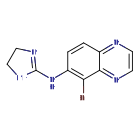
- Mechanism
- Curator reviewed · 9 references
In the eye, alpha-1 adrenoceptors play a role in vasoconstriction, mydriasis, eyelid retraction, and elevation of intraocular pressure (IOP) whereas alpha-2 adrenoceptors are responsible for IOP reduction via a complex Gi-coupled signaling cascade pathway. Activation of alpha-2 receptors leads to inhibition of adenylyl cyclase and reduction of cyclic AMP levels. As a result, there is a decrease in norpinephrine (NE) release at the synaptic junction, NE-induced stimulation of beta-2 adrenoceptors, and production of aqueous humor by the ciliary epithelium. An elevated IOP is the most significant risk factor for developing glaucomatous optic neuropathy, which is associated with progressive visual field loss and functional disability if left untreated. Regardless of the etiology of the disease, the aim of current therapies for glaucoma is to reduce IOP, as reduction of IOP significantly reduces the risk of progression of vision loss even when IOP is already within the normal range. When administered ophthalmically, brimonidine is rapidly absorbed into the eye, acts as an agonist at ocular alpha-2 adrenoceptors and lowers IOP via a dual mechanism of action. It is proposed that initial dosing of the drug causes a reduction in aqueous humour production and chronic dosing leads to an increase in uveoscleral outflow. Brimonidine does not affect episcleral venous pressure. By reducing IOP, brimonidine aims to reduce the likelihood of glaucomatous visual field loss in ocular hypertension, and slow the progression of visual field defect in established open-angle glaucoma. When applied topically on skin, brimonidine reduces erythema through direct vasocontriction of small arteries and veins. As brimonidine mediates a potent peripheral vasoconstrictive activity by selectively working on the alpha-2 adrenoceptors, the use of brimonidine is thought to be efficacious for the treatment of facial erythema of rosacea, which is thought to arise from vasomotor instability and abnormal vasodilation of the superficial cutaneous vasculature of the face.
- Primary indication
- Opthalmic Brimonidine is indicated for lowering intraocular pressure (IOP) in patients with open-angle glaucoma or ocular hypertension as monotherapy or combination product with brinzolamide.Curator reviewed · 9 structured indications
- Formula / weight
- C11H10BrN5 · 292.135 g/mol (avg)
- First approval
- Canada, 2002 · United States, 2001 · European Union, 2016
- Also known as
- Bromoxidine
- Code names
- AGN-190342 · UK-14304
- Brand names
Resolves to
XYLJNLCSTIOKRM-UHFFFAOYSA-NSMILESBrC1=C(NC2=NCCN2)C=CC2=NC=CN=C12What you can answer from here — as of September 23, 2026
Which drugs share a target with Brimonidine, and which of those have an active Phase 3 trial?
Create a free account or log in to explore the full data card.
Create Account